Peach and Raspberry (cakey type) Tart

Standard

Image

While it is true that winter is my favourite season of the year, I can’t help but feel a little enlivened by the warmer weather and the knowledge that summer is on its way. The shops are starting to supply summery fruits once more: mangoes, melons, apricots and other stonefruits, my favourite being the yellow peach. To celebrate the promise of all things summer, I decided it’s the perfect time to try out this simple and delightful recipe from my friend Jess. I love the way Jess does hospitality – simple and tasty food accompanied by no amount of fuss and flourish, she simply focusses on the folks she’s serving. This lovely dessert is the first of a number of affordable and tasty recipes contributed by Jess – costing no more than $5 and even less when peach season is in full swing.

  • 125g butter, softened
  • 1 cup / 220g caster sugar
  • 1 teaspoons vanilla
  • 2 eggs
  • 1 ½ cups / 220g self raising flour, sifted
  • 2 peaches, cut into thin wedges
  • 150g raspberries
  • 2 tablespoons icing sugar

1. Preheat oven to 160 degrees and line 22cm springform tin (not a tart tin – the first time I made this I used a loose-bottomed tart tin and it overflowed because the walls of the tin didn’t come up high enough).

2. Beat butter, sugar, vanilla until light and creamy. Add the eggs and beat well.

3. Fold in flour and put in tin.

4. Top with peaches and raspberries and sprinkle with icing sugar (you can do this randomly or with an ordered pattern. I tried to go with random, but seriously struggled not to order my randomness! The picture above shows a bit of both)

5. Bake 1 hour or until cooked through and serve with vanilla ice-cream, thick cream or good quality yoghurt.

Asian Noodle Salad

Standard

Image

Though not here yet, summer is on its way. And while signs of winter can still be seen, as daylight saving time began in NSW last weekend, our barbeque has been beckoning us. Today we had good reason to give in and so enjoyed our first of the season. And what’s a barbie without some yummy fresh salads? Originally from my friend Amy, the following Asian Noodle Salad is my all time favourite salad. It’s so tasty and filling it could easily be eaten on its own as summer style main course. For these reasons, it’s a terrific option when needing to cater for vegetarian friends and can you believe, this scrummy salad is also egg, dairy and gluten free. As if it couldn’t get any better, this very large salad is so affordable, costing around $8 to make and serves 15+ people as an accompaniment or 8 served as a main.

SALAD

  • 1 x 250g packet of rice stick noodles (clear flat ones, come in a variety of widths)
  • 1 x 250g packet of bean shoots
  • 1 small bunch of coriander, leaves picked from stalks (cheapest from a grocer)
  • 1 bunch of shallots (8-10 stalks)

DRESSING

  • 4 tablespoons soy sauce (use gluten free variety if necessary)
  • 4 tablespoons peanut oil
  • 2 tablespoons sesame oil
  • 2 tablespoons lime or lemon juice (fresh is great, but I always use squeeze from fridge)
  1. Cook noodles for a couple of minutes only, until soft, in a large pot of rapidly boiling water. Drain using a sieve or colander and run lots of cold water through the noodles to stop the cooking process. Rinse out pot with cold water to cool it down, ready to use again for combining the salad ingredients.
  2. Place cooked noodles, coriander leaves, bean shoots and chopped shallots in the cooled down pot. Set aside.
  3. In a jar with a tight lid, shake together soy sauce, peanut oil, sesame oil and lime/lemon juice.
  4. Pour dressing over all the ingredients in the pot and toss well using tongs. Transfer to a large salad bowl and serve at table. Enjoy!

Big Batch Chocolate Chip Cookies

Standard

In general, I don’t really like baking biscuits. I do love the taste of a chewy homemade chocolate chip cookie, but just the thought of repetitively rolling teaspoonfuls of mixture into little balls and cycling tray after tray through the oven, is enough to make me flip-out before I even begin. But when my friend Cathy sent this recipe the other day, I was forced to reconsider my anti-biscuit position. The recipe that follows does away with rolling balls of mixture (yay!) though you can still do that if you prefer, and is made in super-sized quantities that fit the bill for multi-purpose cooking (individually wrapped for school lunches, supper for Bible study, morning tea when cooking for a camp or just for filling the household cookie jar). Along with all these things, I fell in love with this recipe because each of the logs of uncooked cookie mixture can be wrapped in plastic wrap and frozen for emergencies. Simply thaw the log out on 50% in the microwave, cut into rounds and bake for 10 minutes in a moderately slow oven. When I trialled this bumper cookie recipe, I chose to bake half the mixture into 48 biscuits, and freeze the other half in two logs for whenever I need them next. Using Nestle chocolate melts, this recipe, that costs no more than $12 to make (even less if you use homebrand chocolate) works out at just 12 cents per cookie and has definitely softened me up when it comes to biscuit baking!

  • 500grams softened butter or margarine (I use butter)
  • 2 cups/460g castor sugar
  • 1 x 395 tin condensed milk (I use homebrand)
  • 2.5 cups/380g plain flour
  • 2.5 cups/380g self raising flour
  • 190g each of dark, milk and white chocolate melts (half a Nestle Melts packet of each)
  1. Preheat oven to 170 degrees.
  2. Using an electric mixer or beaters, cream butter, sugar and condensed milk. Mixture perfectly fits 5L mixing bowl. If yours is smaller than this, use a plastic all-purpose bowl, readily available in laundry section of the supermarket.
  3. Stir in flours until combined and then stir in choc chips.
  4. On a floured bench top, divide mixture into four equal portions and roll into evenly shaped logs.
  5. Each log makes 24 biscuits, so starting in the middle, with a knife, cut the log in half leaving two portions to make 12 biscuits from each. Cut each section again to make 4 portions which will make 6 biscuits from each. Again, cut each of the four portions in half again, which will make 3 biscuits from each. Finally, cut each of these smallest portions into three equally sized rounds. Repeat the process for each log. This ensures evenly sized biscuits and production of exactly 96 biscuits.
  6. Roll each portion into balls, or do as I do and just place the cut up rounds straight on lined oven trays.
  7. For a crunchier biscuit bake until golden for around 12 minutes, and if you prefer a chewier cookie, cook for no longer than 10 minutes and remove from oven while still a little pale. Cool on tray or wire rack.

Butter Chicken

Standard

My friend Cathy is a great example of someone who practices hospitality. She knows how to make food taste good and she cares for others by unashamedly choosing do-able meals that aren’t trying to impress, but instead hit the spot in ways that don’t break the bank. Recently Cathy sent me a number of her favourite recipes that do all these things and I’m excited to share the first of these with you. The Butter Chicken recipe that follows is delightfully easy – choose to cook this crowd pleasing favourite in either the slow cooker or in a sealed casserole dish for a few hours in the oven. Doubling the measurements listed below neatly fills a 5.5L slow cooker, and doing so is my favourite time saver, fulfilling more than one purpose with just one venture in the kitchen. If you decide to make extra to freeze, here’s a tip I read in a magazine years ago: spray the inside of plastic containers with olive or canola spray before filling. This will create a film that protects the containers from the stain of the red coloured sauce. The quantities that follow serves 10 people and costs under $15 to make.

  • I kg chicken thighs, chopped into chunks
  • I onion, roughly chopped
  • I jar of Patak’s Butter Chicken paste (not the sauce)
  • I x 400g tin of diced or crushed tomatoes
  • I x 420g tin of chickpeas, drained
  • 150ml cream
  • Handful of chopped coriander
  1. Brown chicken and onion in frypan.
  2. Put in a slow cooker or a heavy based casserole dish (covered) with the whole jar of butter chicken paste, tin of tomatoes and chickpeas.
  3. Cook for 2 hours in the oven, or 3 hours on high in the slow cooker or most of the day if set to low.
  4. Season with salt and pepper and add cream and coriander just before serving.
  •  Serve with basmati rice and microwaved pappadums.
  • Raita (natural yoghurt mixed with grated or chopped cucumber) is also a yummy accompaniment.

Nigella Lawson’s Vegemite Spaghetti

Standard

Image

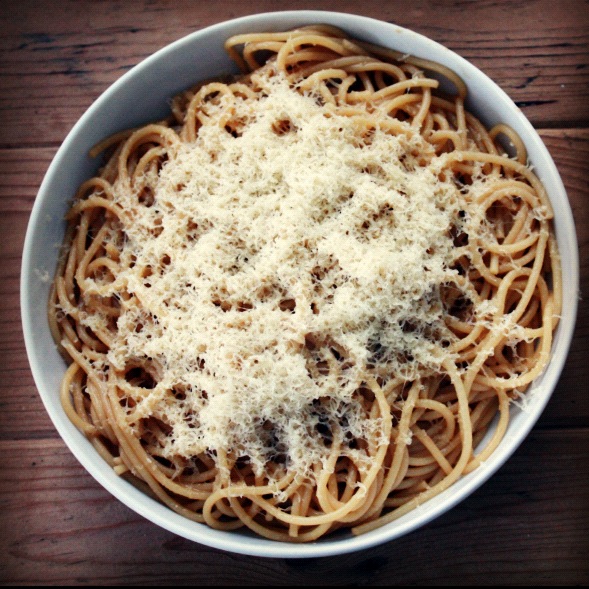
As in most households, I suspect, Sunday night dinners get very slack in this house. ‘Breakfast for dinner’ (yes, Weetbix and porridge) get regular guernseys here – thankfully the kids like it. Every now and then, Sunday night dinner goes beyond slack to the absolute trashy, and tonight it was just that. A few months ago I heard of Nigella Lawson’s Vegemite Spaghetti and it intrigued me. Vegemite and cheese are winners in my tastebud book, so vegemite pasta topped with grated cheese throughly appealed. I was absolutely not disappointed. While I hate to think how bad it is for me (carb heavy, no protein, no vegetables), I think it’s set to become a Sunday night favourite in this house. Despite its not-so-healthy specs, it really is very cheap to make, so much so it’s not worth costing. If you’re a Vegemite fan in other gastronomic contexts, go on, give it a go!

  • 375g dried spaghetti
  • 50g unsalted butter
  • 1 teaspoon Vegemite
  • freshly grated parmesan or tasty cheese to serve

1. Cook the spaghetti in a large pot of salted boiling water according to directions. Drain and rinse under water keeping a cup of the pasta water.

2. In the same pan, put on the heat and evaporate the water and then melt the butter and add the Vegemite and a tablespoon of the pasta water and mix to dissolve. Add the cooked pasta and more pasta water to combine if necessary. Serve with grated parmesan or tasty cheese if you like.

Super Simple Biscotti

Standard

I do love homemade biscotti so was very excited when this simple and yummy recipe landed in by inbox from my friend Soph, who found it on a friend’s blog. Needing to provide dessert for dinner with friends this week, I decided to give these a go because they were able to be made ahead of time, and Soph’s super do-able serving suggestion of dipping in chocolate fondue grabbed me immediately. Don’t be turned off by the two stage cooking process – this recipe is still dead easy and really nowhere as labour intensive as it might seem. I have never succeeded in making biscotti wafer-thin, but having tried, failed and still enjoyed eating chunkier homemade versions of it, I’ve decided I’m okay with it. This winning recipe costs less than $3 to make. Thanks Soph, for this terrific contribution.

  • 1/4 cup oil
  • 1/2 cup sugar
  • 2 tsp vanilla essence
  • 2 eggs
  • 1 3/4 cup all purpose flour
  • 1 tsp baking powder
  • pinch of salt
  • 1/2 cup cranberries
  • 3/4 cup roasted almonds (Woolworth’s homebrand are terrific and cheap!)

1.  In a mixing bowl, mix together the sugar and oil until combined.

2.  Add eggs and vanilla essence and mix thoroughly until combined.

3.  Add flour, baking powder and salt to the egg mixture, and stir to form a dough.  When all the flour is almost incorporated, add in the cranberries and almonds.  Continue stirring until all the flour is incorporated and a dough has formed.

4.  Take half the mixture and using wet hands, form it into a log.  Place the log onto a tray lined with baking paper and pat into a smoother log shape.  Repeat with the remaining dough

5.  Bake at 300F/150C for 35-40 minutes until the logs are slightly golden.

6.  Remove from the oven and cool.  Reduce oven heat to 275F/135C.

7.  Once the logs are cool enough to handle, slice into slices.  Place sliced biscotti back onto tray and bake for 8-10 minutes until crisped.

Donna Hay’s Spiced Chicken & Chorizo Couscous

Standard

Image

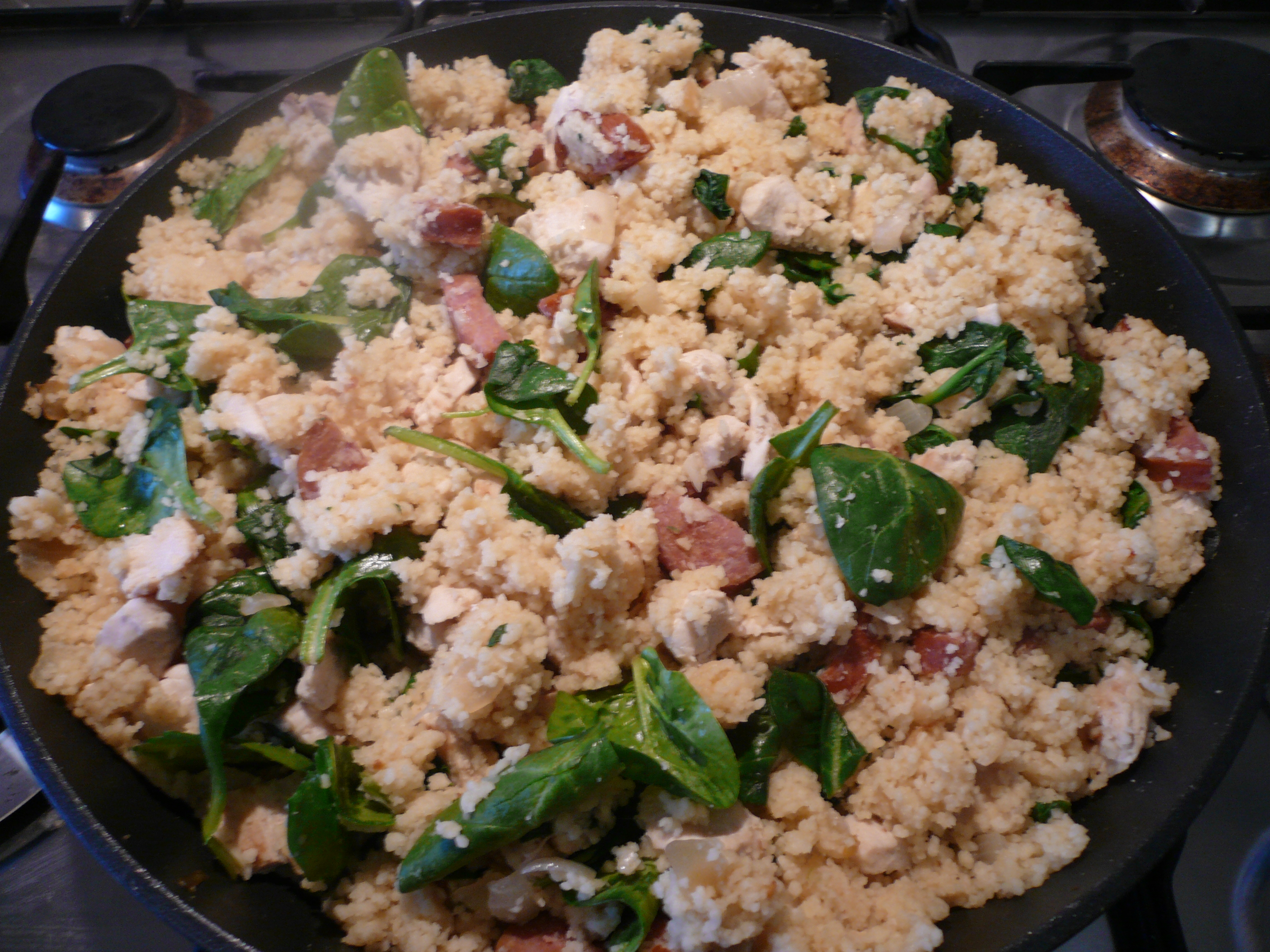
Thankfulness and relief fill my heart whenever I stumble over a recipe like this one. Donna Hay’s Spiced Chicken & Chorizo Couscous from No Time to Cook proved to be delightfully fast to make in just one pan, flavoursome and inexpensive to make. My kids ate stacks of it, asking for more long past their usual limit and it was so simply done that I was able to talk on the phone at length while making it, which happens so rarely in my household in this stage of life. A few comments about Chorizo: I’ve noticed they regularly come on special for half price at the deli at my local Woolworth’s about once every two months, so I tend to buy up then and freeze them in small quantities for meals like these. Even so, this tasty crowd pleasing dinner, which serves 6-8 costs no more than $14 to make.

  • 1 onion, coarsely chopped
  • 2 x chicken breasts (400g total)
  • 2 x Chorizo sausages, sliced thinly into half moon shapes
  • 1 teaspoon chilli flakes
  • 4 cloves garlic, peeled and thinly sliced
  • 2 (500g) cups instant couscous (generic brands are fine)
  • 2 (500ml) cups chicken stock (I used powdered, reconstituted with water)
  • 1 cup (250ml) water
  • 100g fresh baby spinach
  • 1 cup pitted Kalamata olives (optional – leave out to reduce cost if necessary. I’ve done this before and it’s still very yummy)
  1. Place onion, chicken, chorizo, chilli and garlic into a non-stick frying pan over medium-high heat and cook for 5-6 minutes or until chicken is browned.
  2. Add couscous, stock and water to the pan, cover and simmer over low heat for 2 minutes or until couscous is tender. Stir spinach and olives through couscous mixture and serve immediately.

Spaghetti Alla Carbonara

Standard

Image

The other night I was in need of a quick dinner option that would use what I already had in the fridge/cupboard and save a trip to the shops. Taste.com.au came up with this answer and having never before made Carbonara properly, that is, traditionally – I decided to give it a go. The whole family chowed down on this dinner and asked for more. This yummy ‘sometimes’ dinner would be an easy end to a day gone wrong or a simple, achievable meal for a large group. Total cost $3 and serves 6+. Enjoy!

  • 500g spaghetti
  • 1 tbs extra virgin olive oil
  • 1 clove garlic, bruised
  • 150g piece pancetta or bacon, rind removed, finely chopped
  • 4 eggs, at room temperature
  • 40g (1/2 cup) grated parmesan, plus extra, to serve

1. Cook pasta in a large saucepan of boiling salted water for 8 minutes or until al dente. Drain, reserving 125ml (1/2 cup) cooking water.

2. Meanwhile, heat oil in a large, deep frying pan over medium heat. Add garlic and pancetta, and cook, stirring, for 6 minutes or until both are light golden. Discard garlic and remove pan from heat.

3. Whisk eggs, parmesan and 1 tsp freshly ground black pepper in a bowl (don’t add salt as cooking water and pancetta are salty). Add reserved hot cooking water and whisk until well combined.

4. Return frying pan to medium heat. Working quickly, add hot pasta and toss for 2 minutes or until well coated with oil and pancetta. Remove pan from heat, add egg mixture, then toss for 1 minute or until egg mixture is creamy and warmed through (the heat from the pasta and pan will cook and slightly thicken the egg mixture without scrambling it).

5. Divide carbonara among plates and scatter with extra parmesan. Serve immediately.

The How of Hospitality

Standard

From The Christian Pundit

http://thechristianpundit.org/2012/08/01/the-how-of-hospitality/

A couple days ago a young wife and mother asked me about hospitality. She grew up in a home where there were very few guests, so she never had patterns of hospitality passed along to her. Convicted that Scripture commands this of Christians (Rom. 12:13; I Peter 4:9), she was wondering how to make it work, especially with children in the home. Here are ten tips, mostly from my mother, that I came up with:

First, think about whom to invite. We need to practice hospitality the same way that our pastors preach the gospel – promiscuously. Preachers are taught to think about the different categories in their congregation so that they can preach to all sorts and conditions of men. We need to do the same when we think of who to have into our homes; singles, families, widows, rich, poor, educated, ignorant, every age and every race – everyone should be welcome.

Second, show hospitality regularly. You have to plan for it and book time off. Creating regular times to have people in your home not only helps you plan, but also makes hospitality part of your regular routine. Once something is part of the routine, once something has a time slot, it becomes habit, and the more often you do it, the less time it will take. It is better to do it more often, if you can swing it, than less often. You cannot be “given to hospitality” if you only have someone over every month or so. Hospitality needs to be part of your lifestyle, not an special occasion.

Third, do it at a time that works for your family: make visits suit your schedule. Think about the regular free time your family already has – the times where you go for a walk together or have a bbq, and use some of these times to practice hospitality. They are already set off from work, school and church activities, so the time is already there, all you have to do is add a few extra people and a bigger salad. This does not mean that every time you have an evening off you must invite people over, but it does mean that time off is the perfect opportunity for obeying God’s hospitality command. There are certain seasons of life (pregnancy, moving, sickness, etc.) that can limit hospitality for a time, and that is not neglecting the Lord’s command, it is being wise. But most of the time, we need to make hospitality part of the normal routine.

Fourth, make a list. lists keep you from running around, trying to remember what to do next. Two lists, one of things to do, the other with the menu, keep me on track. You can even make a “master list” for showing hospitality, with all the things you do before people come written up on it, so that it is already there every time you practice hospitality. Five minutes of planning and listing can save a couple hours of scrambled activity.

Fifth, manage your house. If your house is organized, regularly cleaned and tidied, then extending hospitality to people will not take days of scrubbing, and digging lego out from between the couch cushions. A ready home means that showing hospitality will only take a quick run with the vacuum cleaner and a good wipe in the bathroom before people arrive. Things do not have to be perfect; but they do need to be tolerably clean and picked-up. I read on a blog the other day a quote from a woman who said, “If you are coming to see me, come right over. If you are coming to see my house, you’ll need to make an appointment.” Regularly manage your home, and don’t worry about perfection. Your goal is to make your guests comfortable so you can minister to them. Manage your home so that it is a tool, not an obstacle or an idol.

Sixth, plan an easy meal. Spending hours creating an elaborate meal will mean less time with your family before the guests arrive and less time for your guests when they do arrive. Simple meals make hosting people easier and faster. And, unless you enjoy boning a duck, simple meals make it less stressful, too. Pick dishes that you can make the day before and pull out of the fridge an hour before folks show up. Put most of your energy into the visit, not the meal.

Seventh, spread the preparation out over a couple days. Do things when you have a spare ten minutes, then check it off your list. Eat the proverbial elephant one bite at a time. Be creative, and enlist the whole family. If you have more than one bathroom, tidy the one the guests will use in the morning after your shower, and declare it off limits to your family from then on. I try to set the dining room table for dinner while my kids eat breakfast in the kitchen. Get your kids to dust in the afternoon, or ask your husband sweep the kitchen while you change your clothes just before people get there. Those of you with older kids can maximize your manpower to whip things into shape.

Eight, be creative. There are many creative ways to practice hospitality – it does not always have to be another family over for dinner. You can prepare a meal for a shut-in or widow, bring it over to their home, share it with them, and do all the clean up. This allows you to fellowship with them and minister to them in their home in a special way. You can co-host a large gathering with another family in the church. That way, you can host a large number of people while sharing the food preparation. You can host people outside of your home. We sometimes take “guests” with little kids to the zoo. We bring snacks and juice boxes for everyone, and the kids can run around without being in danger. There are all sorts of ways to practice hospitality. Just make sure that your home and heart are open to whoever needs them.

Ninth, find a woman in your local congregation that is a good hostess and ask her how she does it. Watch her in action. Take mental notes on how she organized food, how she keeps up conversation, how she cares for each guests’ needs. Ask her if there are any resources, either on cooking, organizing, or conversation, etc., that she learned from. Talk about how a recent hosting experience went for you so she can help you evaluate what happened and why – good and bad. Older women are amazing sources for those of us who are figuring out how to obey in this area.

Tenth, just do it. Practicing hospitality is the best way to learn how to do it well. As you discover what works best for your family, how your routine changes to fit food prep, etc., you will get better and better at it. The apostle tells us to “practice hospitality” because that’s what all of us need – practice. Nobody is born a perfect hostess. We all have to learn. Consistent obedience is the best way to become skilled in opening your home and ministering to others.

Mango Chicken Curry

Standard

Image

My wonderful mother-in-law gave me this recipe years and years ago. Every now and then my husband says “We haven’t had that mango curry in a while” and I’m always surprised I don’t think to make it more often. This not-at-all hot curry gets devoured quickly, is easy-peasy to make and so affordable. It’s a great option for hospitality because you can do all the preparation in advance, long before people arrive, and simply leave the stir-frying until you’re about to eat – cause there’s no more than 10 minutes cooking time for this dish. Ensure rice on the go in a rice cooker while people arrive and you really won’t have much to do in the kitchen when things are getting underway. The quantities listed below serves 6 and is easily doubled when cooked in a wok for a larger group. This flavoursome dinner costs around $10.

  • 2 large chicken breast fillets, thinly sliced
  • 1x440g can mango cheeks, thinly sliced (home brand is fine)
  • 1 tablespoon yellow curry powder
  • 1 tablespoon sesame oil
  • 2 cloves garlic, crushed
  • 6 spring onions, white ends chopped roughly, green stalks thinly sliced
  • 1 tablespoon wholegrain mustard
  • 1/2 cup chicken stock (powdered or cubed is fine)
  • 2 carrots, peeled and julienned
  • 100g snow peas, thinly sliced
  • 1/3 cup sour cream
  • salt & pepper to taste
  1. In a large frypan or wok on maximum heat, cook sesame oil, garlic and white ends of spring onions until fragrant.
  2. Add chicken strips and fry until brown on all sides. Turn pan down to low and add carrots, curry powder, mustard and stock. Simmer for 5 mins.
  3. Add green stalks of spring onions, snow peas and sour cream. Season with salt and pepper. Just before serving, gently fold through thinly sliced mango cheeks. Serve with rice.